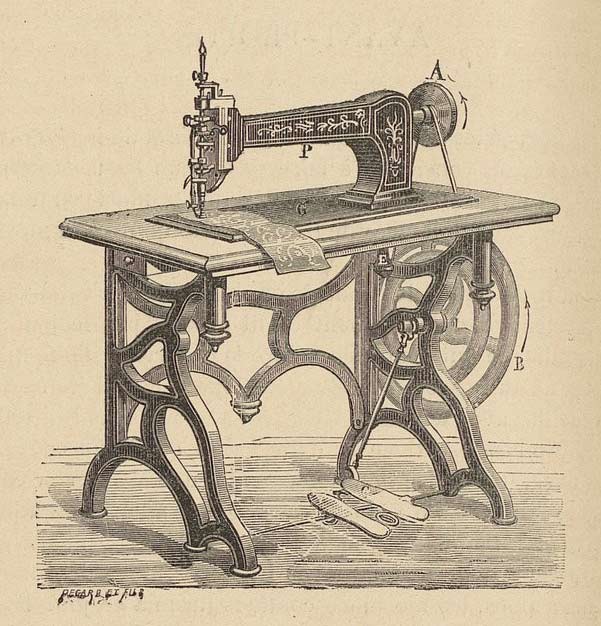
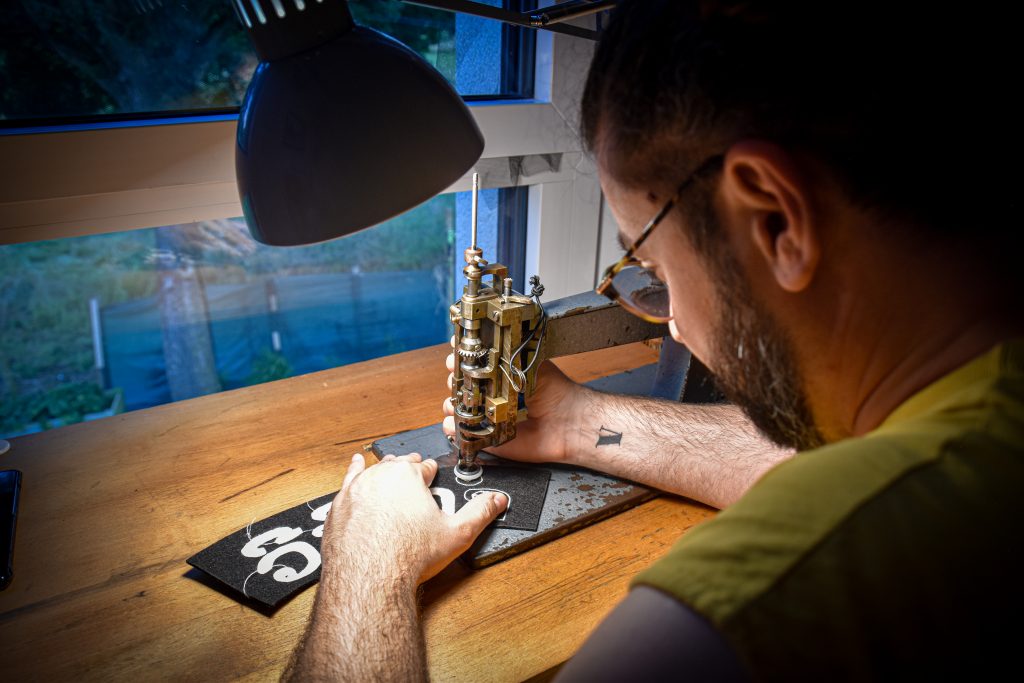
Welcome to the world of hand embroidery where tradition and modernity meet thanks to the exceptional Cornely machine guided by hand. As a French craftsman, I use one of these exceptional machines to create embroidery in chain stitch and in garter stitch on various types of materials. I offer a diverse range of embroidered products, including patches, keychains and bandanas… Also offering custom embroidery on request, I put my expertise at your service to create unique and made-to-measure pieces.
There Cornely embroiderer, also known as chainstitch machine For English speakers, it offers unparalleled creative freedom. Thanks to its manual manipulation, each embroidery is unique, bearing the artisan's personal touch. Chain stitches, with their fluid continuity, and garter stitch, adding volume, allow for the creation of complex and refined designs, lending a vintage feel to the creations.
The Cornely machine: a historical legacy
The invention of the Cornely machine
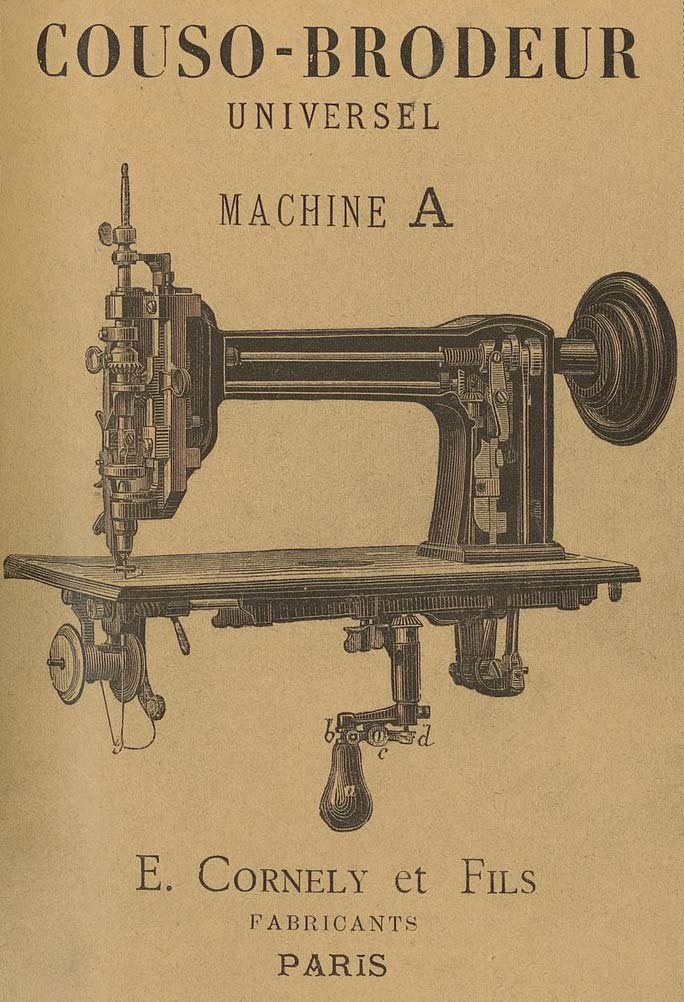
The Cornely machine, originally called seamstress-embroiderer, A true revolution in the world of embroidery, the chain stitch emerged at the end of the 19th century. Its history begins with several attempts at innovation. John Duncan in 1804 and Joseph Heilmann in 1828 tried to create a machine capable of producing a continuous chain stitch, but without lasting success. Barthélemy Thimonnier, a tailor by trade, designed a sewing machine in 1830 inspired by tambour embroidery, but his invention did not achieve commercial success.
It was only in the early 1860s that Antoine Bonnaz, an engineer from Isère specializing in silk machines, developed the first functional industrial chain stitch machine. He solved the technical problems of previous models and sold his patent to the Hurtu and Hautin company. Emile Cornely, Having acquired this patent, he perfected the machine by introducing an innovative hook needle capable of producing continuous chain stitches.
Originally called Bonnaz machines, these machines were quickly renamed Cornely machines. They first spread throughout northern France before conquering the embroidery industry in St. Gallen, Switzerland, and being exported worldwide. Today, Cornely machines, known for their precision and speed, are indispensable to embroidery artisans for creating refined and intricate embroidered designs.
Evolution of its use
Over the decades, the use of the Cornely machine has evolved. From mass production to handcrafted creations, it has adapted to the changing needs of embroiderers. Today, the hand-guided Cornely is particularly prized for its ability to create chain stitch and garter stitch, thus offering a wide variety of textures and patterns.
In the United States, chain stitch embroidery is deeply rooted in the history of vintage clothing. Renowned for its distinctive looped pattern, it combined both functionality and aesthetics and was widely adopted throughout the 20th century. From workwear to sports uniforms, this embroidery technique played a key role in establishing the durability and characteristic style of these garments.
Chain stitch was frequently used on work jackets from the early to mid-20th century. Companies embroidered logos and names onto the uniforms of mechanics and laborers, taking advantage of the technique's durability to reinforce the lettering on these garments. Furthermore, the raised and textured patterns provided a rustic charm that still appeals to collectors today.
This type of embroidery was also found on bowling shirts and Western clothing. In the 1940s and 1950s, bowling shirts were often adorned with team names, logos, and nicknames worked in chain stitch, while Western shirts were distinguished by colorful floral embroidery and lettering, creating iconic styles that remain popular today. These bold, intricate, and brightly colored designs have become staples of vintage fashion.
Today, chain stitch is experiencing a resurgence in popularity. Many brands and artisans are reusing vintage machines, such as the Cornely, to reproduce the handcrafted look of mid-century clothing, thus reintroducing this timeless embroidery technique into contemporary fashion.
Why choose hand-guided Cornely machine embroidery?
Cornely machine embroidery offers unparalleled artisanal quality. By choosing this type of embroidery, you are opting for unique creations, crafted with passion and perpetuating French savoir-faire. Whether you wish to personalize a garment, create a unique patch, or give an original gift, Cornely embroidery is an ideal option.
Discover RABALLAND 17, my artisan embroidery workshop. I create unique pieces using a Cornely machine. Take a look! the range of embroidered products that I propose to you.
Don't hesitate to contact me For all your custom embroidery requests, together we will bring your most creative projects to life.


 EN
 FR